FOS‑P1 — Fiber‑Optic Smart Phone S1
Regulatory Design Requirements (MBP‑026 — R1.0)
Purpose & Scope
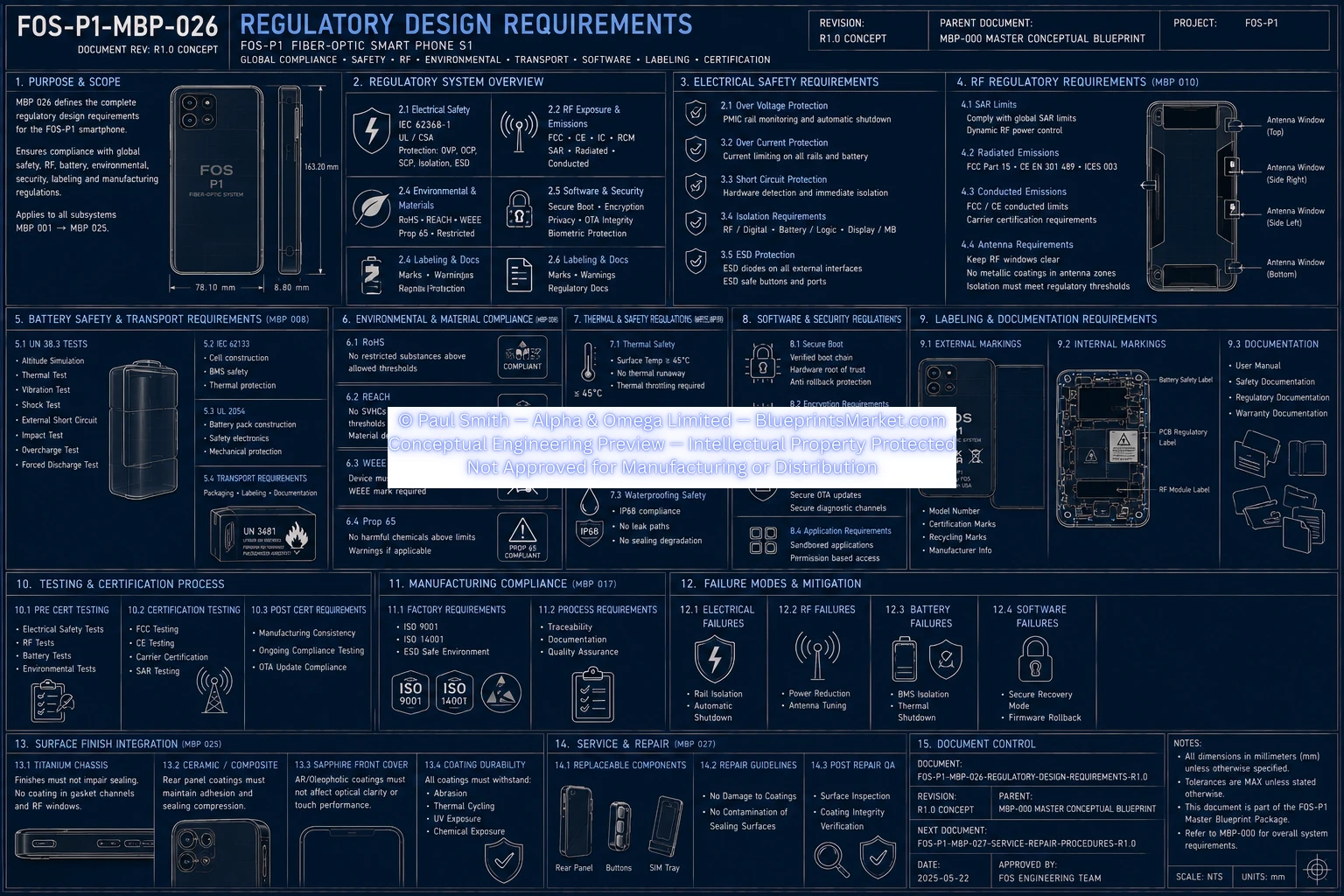
MBP‑026 defines the complete regulatory design requirements for the FOS‑P1 smartphone. This includes global electrical safety, RF exposure and emissions compliance, battery safety and transport regulations, environmental and material compliance, labeling and documentation requirements, regional certification pathways, manufacturing compliance, software/security compliance, and testing/verification requirements.
Regulatory System Overview
The FOS‑P1 must comply with the following global regulatory domains:
Electrical Safety Standards
- IEC 62368‑1
- UL / CSA equivalents
- Over‑voltage, over‑current, short‑circuit protection
RF Exposure & Emissions
- FCC (USA)
- CE (Europe)
- IC (Canada)
- RCM (Australia/NZ)
- SAR limits
- Radiated and conducted emissions
Battery Safety & Transport
- UN 38.3
- IEC 62133
- UL 2054
- Thermal runaway protection
Environmental & Material Compliance
- RoHS
- REACH
- WEEE
- California Prop 65
Software & Security Compliance
- Secure boot
- Encryption standards
- Privacy requirements
- OTA update integrity
Labeling & Documentation
- Model number
- Certification marks
- Safety warnings
- Recycling marks
Electrical Safety Requirements
Over‑Voltage Protection
- PMIC‑controlled rail monitoring
- Automatic shutdown above safe thresholds
Over‑Current Protection
- Main rail current limiting
- Battery discharge current limiting
Short‑Circuit Protection
- Hardware‑level short detection
- Immediate rail isolation
Isolation Requirements
- RF vs digital domain isolation
- Battery vs logic domain isolation
ESD Protection
- ESD diodes on external interfaces
- ESD‑safe button and port design
RF Regulatory Requirements (MBP‑010)
SAR Limits
- Must comply with global SAR limits
- Dynamic RF power control required
Radiated Emissions
- FCC Part 15
- CE EN 301 489
- ICES‑003
Conducted Emissions
- FCC/CE conducted limits
- Carrier certification requirements
Antenna Requirements
- RF windows must remain unobstructed
- No metallic coatings over antenna zones
- Antenna isolation must meet regulatory thresholds
Battery Safety & Transport Requirements (MBP‑008)
UN 38.3 Compliance
- Altitude simulation
- Thermal test
- Vibration test
- Shock test
- External short‑circuit test
- Impact test
- Overcharge test
- Forced discharge test
IEC 62133 Requirements
- Cell construction requirements
- BMS safety requirements
- Thermal protection
UL 2054 Requirements
- Battery pack construction
- Safety electronics
- Mechanical protection
Transport Requirements
- Packaging
- Labeling
- Documentation
Environmental & Material Compliance
RoHS
- No restricted substances above allowed thresholds
REACH
- No SVHCs above allowed thresholds
- Material declarations required
WEEE
- Device must be recyclable
- Required markings must be present
Prop 65
- No harmful chemicals above limits
- Warnings required if applicable
Thermal & Safety Regulations (MBP‑015, MBP‑019)
Thermal Safety
- Surface temperature ≤ 45°C
- No thermal runaway
- Thermal throttling required
Mechanical Safety
- Drop safety
- Impact safety
- No sharp edges
- No hazardous protrusions
Waterproofing Safety
- IP68 compliance
- No leak paths
- No sealing degradation
Software & Security Regulations (MBP‑016)
Secure Boot Requirements
- Verified boot chain
- Hardware root of trust
- Anti‑rollback protection
Encryption Requirements
- AES‑256 hardware encryption
- Secure key storage
- Biometric data isolation
Privacy Requirements
- Compliance with global privacy laws
- Secure OTA updates
- Secure diagnostic channels
Application Requirements
- Sandboxed applications
- Permission‑based access
Labeling & Documentation Requirements
External Markings
- Model number
- Certification marks (FCC, CE, RCM, etc.)
- Recycling marks
- Manufacturer information
Internal Markings
- Battery safety labels
- PCB regulatory labels
- RF module labels
Documentation
- User manual
- Safety documentation
- Regulatory documentation
- Warranty documentation
Testing & Certification Process
Pre‑Certification Testing
- Electrical safety tests
- RF tests
- Battery tests
- Environmental tests
Certification Testing
- FCC testing
- CE testing
- Carrier certification
- SAR testing
Post‑Certification Requirements
- Manufacturing consistency
- Ongoing compliance testing
- OTA update compliance
Manufacturing Compliance (MBP‑017)
Factory Requirements
- ISO 9001
- ISO 14001
- ESD‑safe environment
Process Requirements
- Traceability
- Documentation
- Quality assurance
Failure Modes & Mitigation
Electrical Failures
- Rail isolation
- Automatic shutdown
RF Failures
- Power reduction
- Antenna tuning
Battery Failures
- BMS isolation
- Thermal shutdown
Software Failures
- Secure recovery mode
- Firmware rollback
Document Control
- Document: FOS‑P1‑MBP‑026‑REGULATORY‑DESIGN‑REQUIREMENTS‑R1.0
- Revision: R1.0 Concept
- Parent: MBP‑000
- Next Document: MBP‑027 — Service & Repair Procedures
FOS‑P1 Commercial Manufacturing License
The FOS‑P1 Fiber‑Optic Smart Phone S1 is licensed as a premium conceptual engineering system. This license grants manufacturers the right to produce, distribute, and sell real-world implementations of the FOS‑P1 architecture while ensuring full copyright protection, global royalty enforcement, and long-term conceptual IP ownership retained by the Licensor.
View Full License AgreementLicensing & Royalty Pricing Structure
| License Type | Commercial Manufacturing License |
| One‑Time License Fee | USD $5,000,000 |
| Royalty Rate | 8% per unit sold worldwide |
| Term | 5 Years (Mandatory Renewal) |
| Ownership | Licensor retains 100% copyright & IP |
| Patents | All patents & derivative patents prohibited |
| Sublicensing | Strictly prohibited |
| Reporting & Audits | Quarterly reporting & mandatory audit compliance |
Commercial Manufacturing License Agreement
This Commercial Manufacturing License Agreement (“Agreement”) governs the rights and obligations between the Licensor (Blueprints Market / Paul Geoffrey Smith) and the Licensee (the purchasing manufacturer). By purchasing the FOS‑P1 Conceptual Engineering Package, the Licensee agrees to the following legally binding terms:
1. Grant of License
The Licensor grants the Licensee a non‑exclusive, non‑transferable, non‑sublicensable right to manufacture, distribute, and sell physical products derived from the FOS‑P1 conceptual engineering system for a period of five (5) years, subject to mandatory renewal.
2. Intellectual Property Ownership
The Licensor retains full and exclusive ownership of all conceptual engineering designs, blueprints, documentation, system architecture, and derivative works. No transfer of ownership is granted under this Agreement.
3. Royalty Obligations
The Licensee agrees to pay a royalty of eight percent (8%) of the wholesale price for every unit manufactured, distributed, or sold worldwide that incorporates any portion of the FOS‑P1 conceptual engineering system, whether in whole or in part.
4. Reporting Requirements
The Licensee must submit quarterly sales reports detailing units manufactured, units sold, wholesale pricing, and total royalty amounts owed. Failure to report constitutes a breach of Agreement.
5. Audit Rights
The Licensor reserves the right to conduct independent audits of the Licensee’s manufacturing and sales records to verify compliance. The Licensee must provide full access to relevant documentation upon request.
6. Patent Restrictions
The Licensee is strictly prohibited from filing patents, patent applications, or derivative patents based on any portion of the FOS‑P1 conceptual engineering system. Any attempt to patent the system or its derivatives constitutes immediate termination of the Agreement.
7. Sublicensing Restrictions
The Licensee may not sublicense, transfer, lease, or otherwise distribute the conceptual engineering package or any portion thereof to third parties.
8. Global Enforcement
This Agreement is enforceable worldwide. Any unauthorized use, reproduction, or distribution of the conceptual engineering system will result in legal action, damages, and immediate termination of the License.
9. Renewal
Renewal of this Agreement is mandatory every five (5) years. Renewal fees and updated royalty terms may apply based on market conditions and technological advancements.
Why This Technology Matters
The FOS‑P1 represents a breakthrough in smartphone engineering. Its multimode fiber‑optic display core, titanium structural chassis, multi‑camera imaging system, advanced thermal architecture, secure software stack, and modular subsystem design make it a next‑generation platform for premium mobile devices. Manufacturers who adopt this system gain access to a world‑first conceptual architecture capable of generating multi‑billion‑dollar product lines.
How to License the FOS‑P1 System
To obtain the Commercial Manufacturing License, manufacturers must contact Blueprints Market directly. Licensing for the FOS‑P1 Fiber‑Optic Smart Phone S1 is handled on a case‑by‑case basis, including full verification, contractual review, and compliance assessment. Once approved, the Licensee receives the complete Master Blueprint Package (MBP‑000 → MBP‑030), commercial manufacturing rights, and access to ongoing conceptual engineering updates.
Blueprint Image Set — FOS‑P1
High‑resolution engineering blueprint sheets for the complete fiber‑optic smartphone system.