
FOS‑P1 — Fiber‑Optic Smart Phone S1
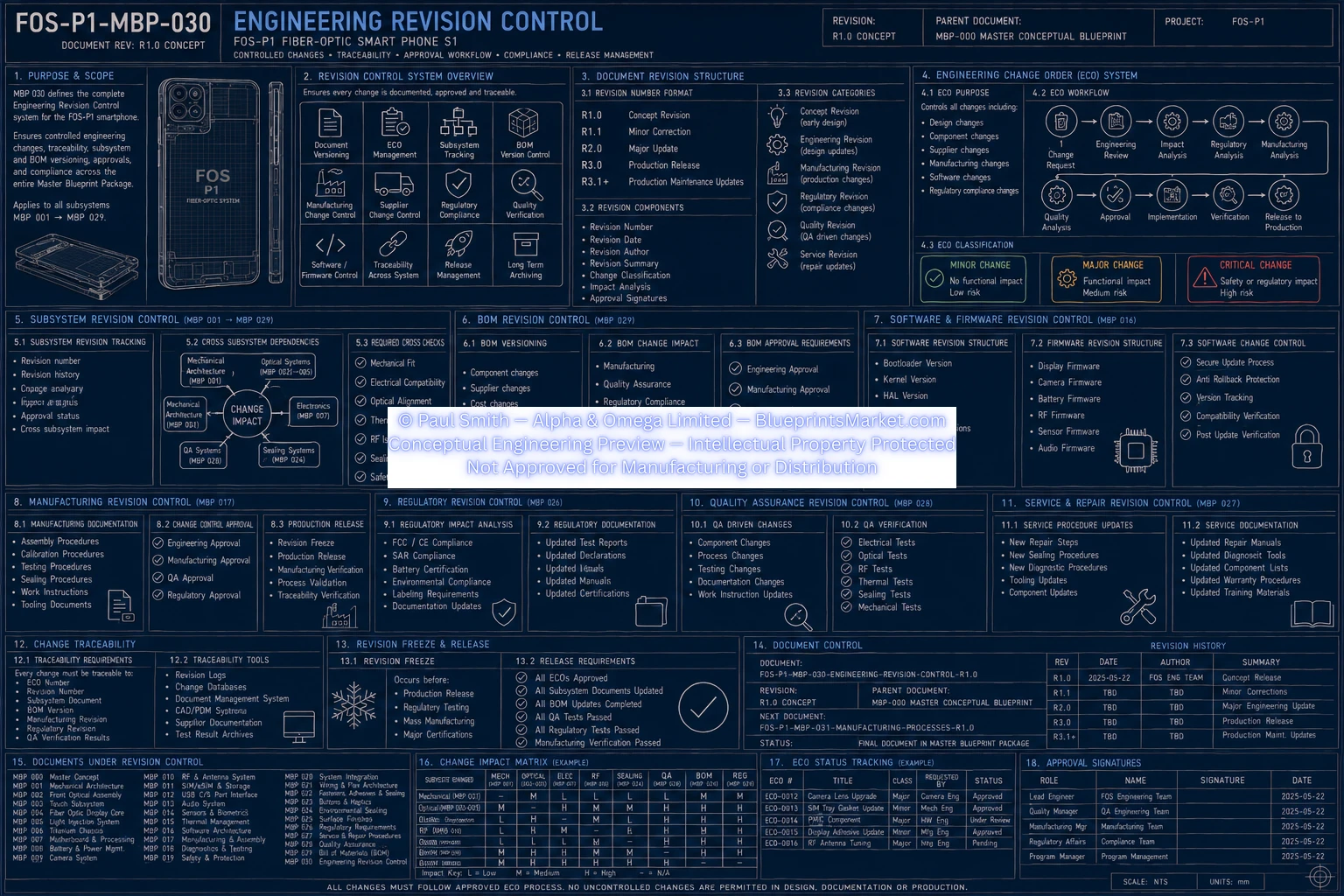
Engineering Revision Control (MBP‑030 — R1.0)
Purpose & Scope
MBP‑030 defines the complete engineering revision control system for the FOS‑P1 smartphone. This includes controlled engineering changes, document versioning, BOM revision tracking, subsystem revision tracking, change approval workflows, ECOs, manufacturing and supplier change control, regulatory compliance tracking, QA integration, and full traceability across the entire Master Blueprint Package.
Revision Control System Overview
The revision control system ensures every engineering change is documented, traceable, evaluated, approved, and verified before release. No uncontrolled changes enter production.
- Master Blueprint Package (MBP000 → MBP030)
- Subsystem documents
- CAD files
- Blueprints
- Manufacturing documentation
- Testing documentation
- Software & firmware
- BOM (MBP029)
- Supplier documentation
Document Revision Structure
Revision Number Format
- R1.0 — Concept Revision
- R1.1 — Minor Correction
- R2.0 — Major Update
- R3.0 — Production Release
- R3.1+ — Production Maintenance Updates
Revision Components
- Revision number
- Revision date
- Revision author
- Revision summary
- Change classification
- Approval signatures
Revision Categories
- Concept Revision
- Engineering Revision
- Manufacturing Revision
- Regulatory Revision
- Quality Revision
- Service Revision
Engineering Change Order (ECO) System
ECO Purpose
- Design changes
- Component changes
- Supplier changes
- Manufacturing changes
- Software changes
- Regulatory compliance changes
ECO Workflow
- Change Request Submitted
- Engineering Review
- Cross‑Subsystem Impact Analysis
- Regulatory Impact Analysis
- Manufacturing Impact Analysis
- Quality Impact Analysis
- Approval
- Implementation
- Verification
- Release to Production
ECO Classification
- Minor Change — no functional impact
- Major Change — functional impact
- Critical Change — safety or regulatory impact
Subsystem Revision Control (MBP001 → MBP029)
Subsystem Revision Tracking
- Revision number
- Revision history
- Change summary
- Impact analysis
Cross‑Subsystem Dependencies
- Mechanical architecture
- Optical systems
- Electronics
- RF systems
- Sealing
- QA
- BOM
Required Cross‑Checks
- Mechanical fit
- Electrical compatibility
- Optical alignment
- Thermal impact
- RF isolation
- Sealing integrity
BOM Revision Control (MBP029)
BOM Versioning
- Component changes
- Supplier changes
- Cost changes
- Material changes
- Regulatory compliance changes
BOM Change Impact
- Manufacturing
- QA
- Regulatory compliance
- Service procedures
BOM Approval Requirements
- Engineering approval
- Manufacturing approval
- QA approval
- Regulatory approval
Software & Firmware Revision Control (MBP016)
Software Revision Structure
- Bootloader version
- Kernel version
- HAL version
- Driver versions
- System service versions
- OTA update version
Firmware Revision Structure
- Display firmware
- Camera firmware
- Battery firmware
- RF firmware
- Sensor firmware
Software Change Control
- Secure update process
- Anti‑rollback protection
- Version tracking
Manufacturing Revision Control (MBP017)
Manufacturing Documentation
- Assembly procedures
- Calibration procedures
- Testing procedures
- Sealing procedures
Manufacturing Change Control
- Engineering approval
- Manufacturing approval
- QA approval
- Regulatory approval
Production Release
- Revision freeze
- Production release
- Manufacturing verification
Regulatory Revision Control (MBP026)
Regulatory Impact Analysis
- FCC/CE compliance
- SAR compliance
- Battery certification
- Environmental compliance
Regulatory Documentation
- Updated test reports
- Updated declarations
- Updated labels
Quality Assurance Revision Control (MBP028)
QA‑Driven Changes
- Component changes
- Process changes
- Testing changes
- Documentation changes
QA Verification
- Electrical tests
- Optical tests
- RF tests
- Thermal tests
- Sealing tests
- Mechanical tests
Service & Repair Revision Control (MBP027)
Service Procedure Updates
- New repair steps
- New sealing procedures
- New diagnostic procedures
Service Documentation Updates
- Updated repair manuals
- Updated diagnostic tools
- Updated component lists
Change Traceability
Traceability Requirements
- ECO number
- Revision number
- Subsystem document
- BOM version
- Manufacturing revision
- Regulatory revision
Traceability Tools
- Revision logs
- Change databases
- Supplier documentation
Revision Freeze & Release
Revision Freeze
- Before production release
- Before regulatory testing
- Before mass manufacturing
Release Requirements
- All ECOs approved
- All subsystem documents updated
- All BOM updates completed
- All QA tests passed
- All regulatory tests passed
Document Control
- Document: FOS‑P1‑MBP‑030‑ENGINEERING‑REVISION‑CONTROL‑R1.0
- Revision: R1.0 Concept
- Parent: MBP‑000
- Status: Final Document in Master Blueprint Package
FOS‑P1 Commercial Manufacturing License
The FOS‑P1 Fiber‑Optic Smart Phone S1 is licensed as a premium conceptual engineering system. This license grants manufacturers the right to produce, distribute, and sell real-world implementations of the FOS‑P1 architecture while ensuring full copyright protection, global royalty enforcement, and long-term conceptual IP ownership retained by the Licensor.
View Full License AgreementLicensing & Royalty Pricing Structure
| License Type | Commercial Manufacturing License |
| One‑Time License Fee | USD $5,000,000 |
| Royalty Rate | 8% per unit sold worldwide |
| Term | 5 Years (Mandatory Renewal) |
| Ownership | Licensor retains 100% copyright & IP |
| Patents | All patents & derivative patents prohibited |
| Sublicensing | Strictly prohibited |
| Reporting & Audits | Quarterly reporting & mandatory audit compliance |
Commercial Manufacturing License Agreement
This Commercial Manufacturing License Agreement (“Agreement”) governs the rights and obligations between the Licensor (Blueprints Market / Paul Geoffrey Smith) and the Licensee (the purchasing manufacturer). By purchasing the FOS‑P1 Conceptual Engineering Package, the Licensee agrees to the following legally binding terms:
1. Grant of License
The Licensor grants the Licensee a non‑exclusive, non‑transferable, non‑sublicensable right to manufacture, distribute, and sell physical products derived from the FOS‑P1 conceptual engineering system for a period of five (5) years, subject to mandatory renewal.
2. Intellectual Property Ownership
The Licensor retains full and exclusive ownership of all conceptual engineering designs, blueprints, documentation, system architecture, and derivative works. No transfer of ownership is granted under this Agreement.
3. Royalty Obligations
The Licensee agrees to pay a royalty of eight percent (8%) of the wholesale price for every unit manufactured, distributed, or sold worldwide that incorporates any portion of the FOS‑P1 conceptual engineering system, whether in whole or in part.
4. Reporting Requirements
The Licensee must submit quarterly sales reports detailing units manufactured, units sold, wholesale pricing, and total royalty amounts owed. Failure to report constitutes a breach of Agreement.
5. Audit Rights
The Licensor reserves the right to conduct independent audits of the Licensee’s manufacturing and sales records to verify compliance. The Licensee must provide full access to relevant documentation upon request.
6. Patent Restrictions
The Licensee is strictly prohibited from filing patents, patent applications, or derivative patents based on any portion of the FOS‑P1 conceptual engineering system. Any attempt to patent the system or its derivatives constitutes immediate termination of the Agreement.
7. Sublicensing Restrictions
The Licensee may not sublicense, transfer, lease, or otherwise distribute the conceptual engineering package or any portion thereof to third parties.
8. Global Enforcement
This Agreement is enforceable worldwide. Any unauthorized use, reproduction, or distribution of the conceptual engineering system will result in legal action, damages, and immediate termination of the License.
9. Renewal
Renewal of this Agreement is mandatory every five (5) years. Renewal fees and updated royalty terms may apply based on market conditions and technological advancements.
Why This Technology Matters
The FOS‑P1 represents a breakthrough in smartphone engineering. Its multimode fiber‑optic display core, titanium structural chassis, multi‑camera imaging system, advanced thermal architecture, secure software stack, and modular subsystem design make it a next‑generation platform for premium mobile devices. Manufacturers who adopt this system gain access to a world‑first conceptual architecture capable of generating multi‑billion‑dollar product lines.
How to License the FOS‑P1 System
To obtain the Commercial Manufacturing License, manufacturers must contact Blueprints Market directly. Licensing for the FOS‑P1 Fiber‑Optic Smart Phone S1 is handled on a case‑by‑case basis, including full verification, contractual review, and compliance assessment. Once approved, the Licensee receives the complete Master Blueprint Package (MBP‑000 → MBP‑030), commercial manufacturing rights, and access to ongoing conceptual engineering updates.
Blueprint Image Set — FOS‑P1
High‑resolution engineering blueprint sheets for the complete fiber‑optic smartphone system.