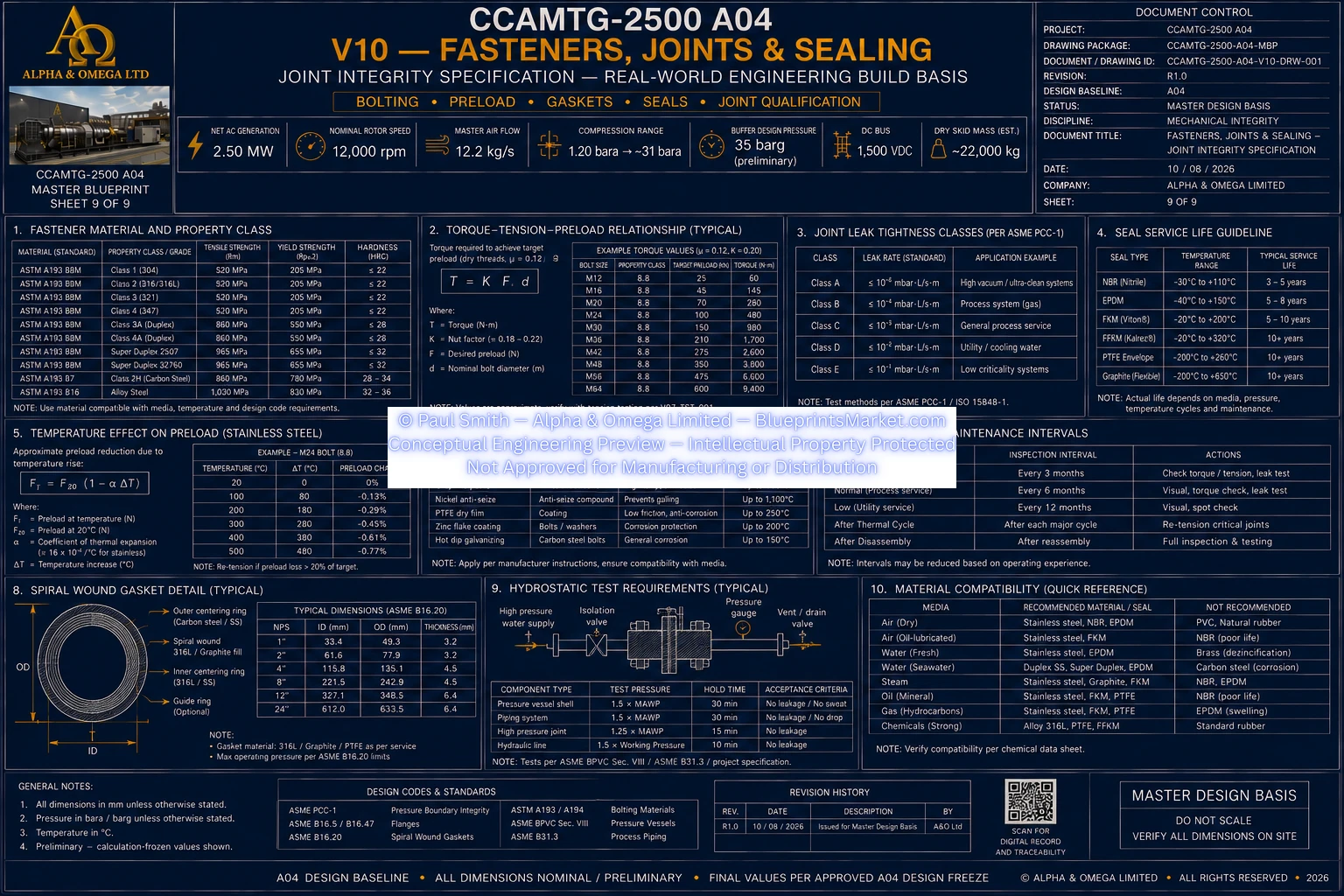
CCAMTG-2500 A04 — Fasteners, Joints & Sealing
Volume 10 defines the mechanical-integrity framework for fasteners, bolted joints, pressure-boundary
connections, casing joints, gaskets, static and dynamic seals, rotating retention systems, structural
interfaces, controlled preload, locking, inspection, traceability, maintenance and joint qualification
throughout the CCAMTG-2500 A04 engineering platform.
Fasteners, Joints & Sealing Overview
- Critical bolted-joint engineering
- Controlled preload methodology
- Pressure-boundary joint integrity
- Pressure flange and casing-joint engineering
- Gasket and sealing-system selection
- Rotating-component retention
- Structural and alignment-critical joints
- Installation and tightening controls
- Inspection and joint qualification
- Lifecycle traceability and maintenance controls
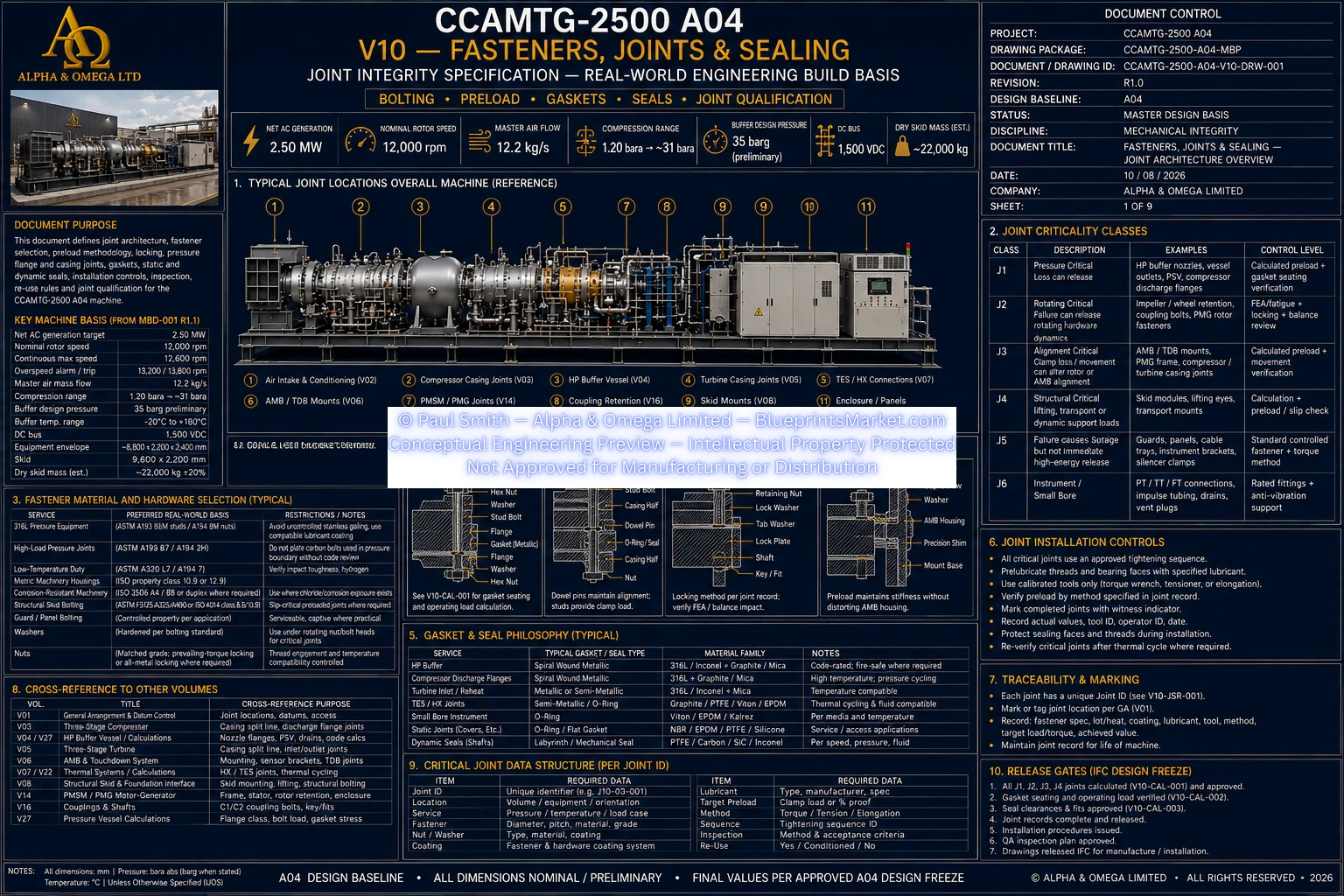
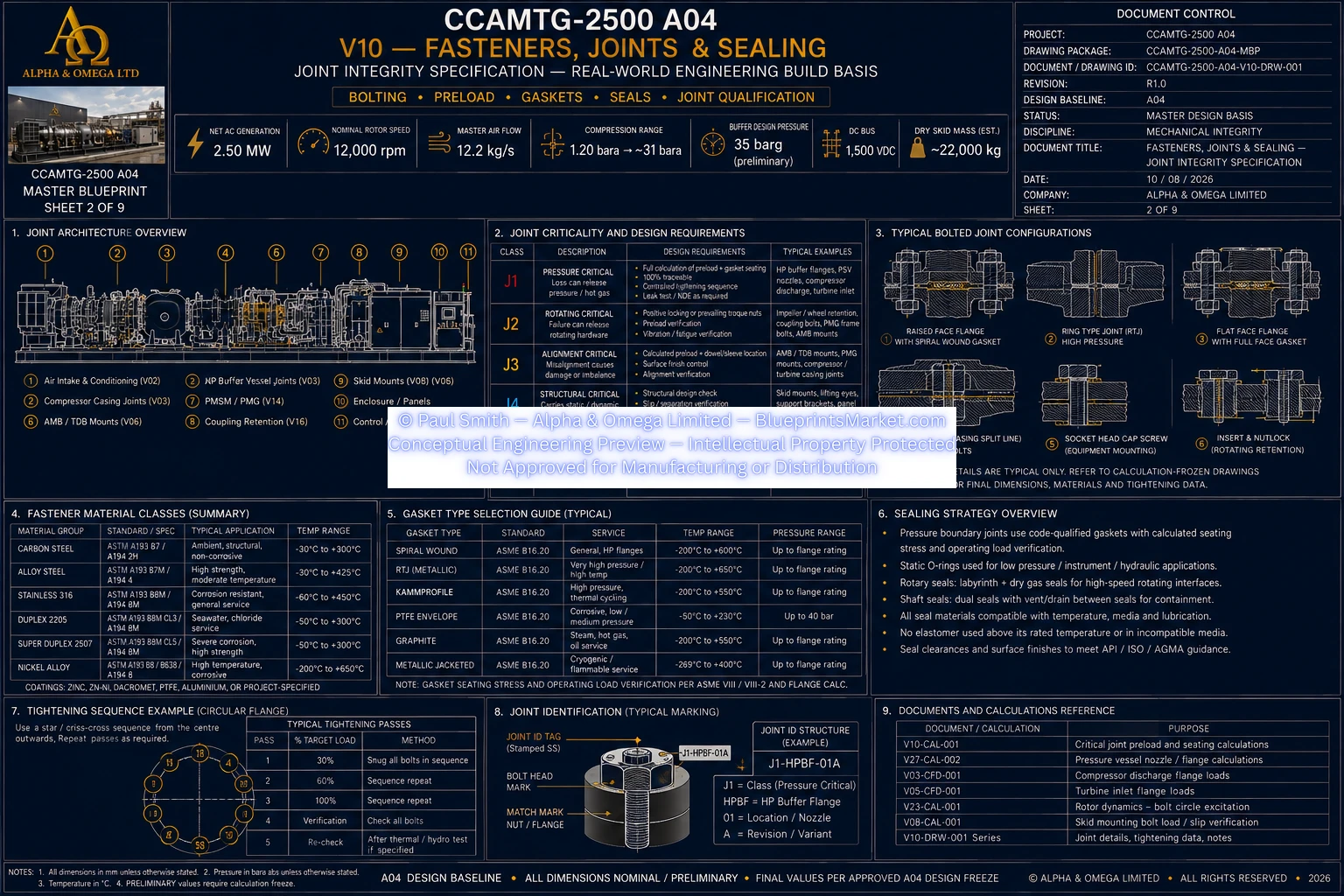
Joint Classification & Criticality
- Pressure-critical joints
- Rotating-critical joints
- Alignment-critical joints
- Structural-critical joints
- Functional and service joints
- Instrumentation and small-bore connections
Fastener & Hardware Engineering
- Pressure-equipment fastener systems
- High-load bolting systems
- Low-temperature pressure-duty fasteners
- High-strength machinery fasteners
- Corrosion-resistant fastening systems
- Structural skid bolting
- Controlled nut and washer systems
- Serviceable guard and panel hardware
Thread & Joint Geometry Control
- Controlled thread-system selection
- Critical thread engagement requirements
- Thread runout and cyclic-stress considerations
- Blind-hole and tapped-hole engineering
- Bolt-hole, spotface and counterbore control
- Bearing-surface alignment requirements
- Thread tolerance and gauging requirements
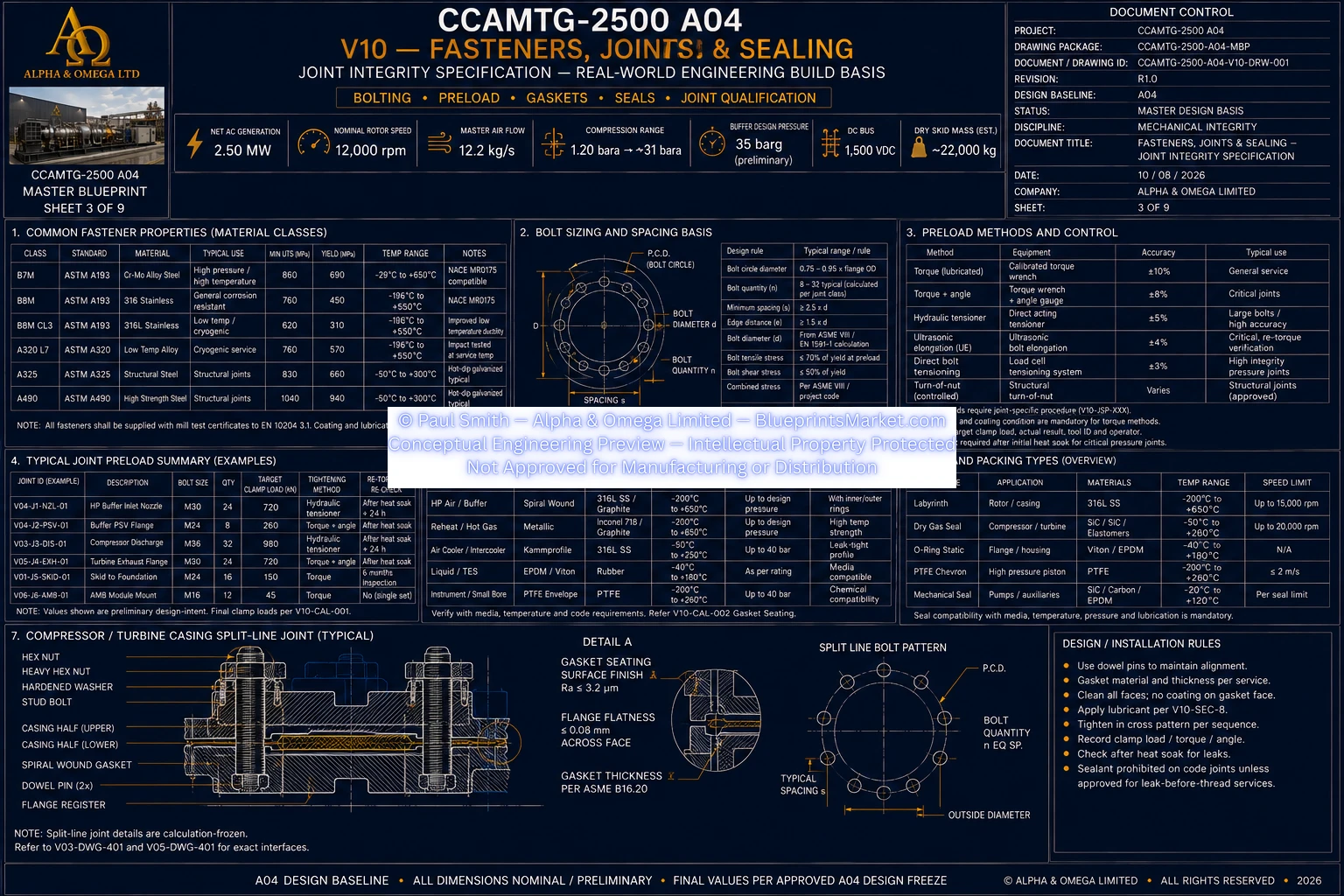
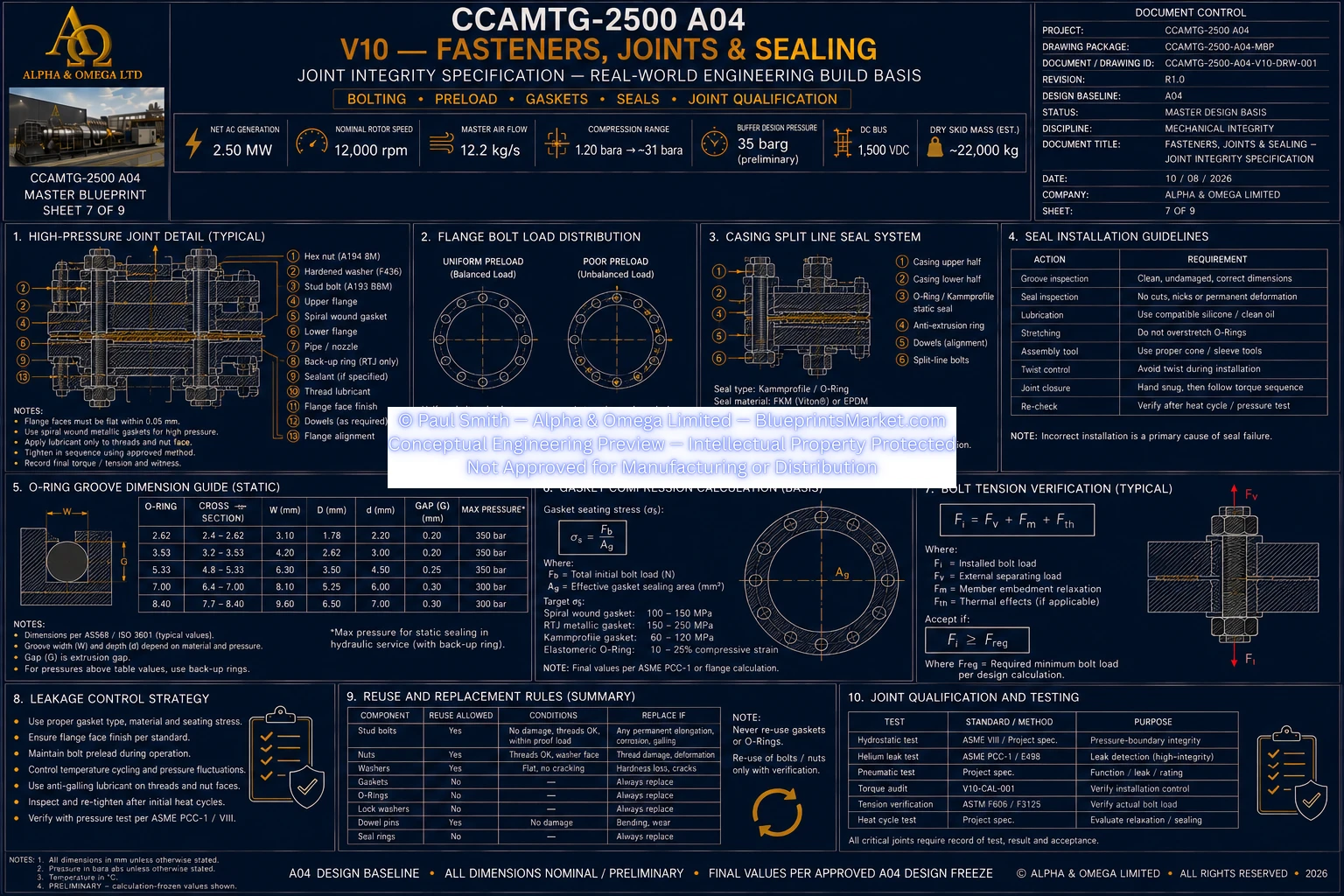
Preload Engineering
- Joint-specific preload calculation methodology
- Bolt and clamped-member stiffness analysis
- Joint separation-margin verification
- Slip and shear resistance assessment
- Fastener fatigue evaluation
- Thermal-expansion effects
- Embedment and relaxation assessment
- Installation-scatter control
- Fastener overload verification
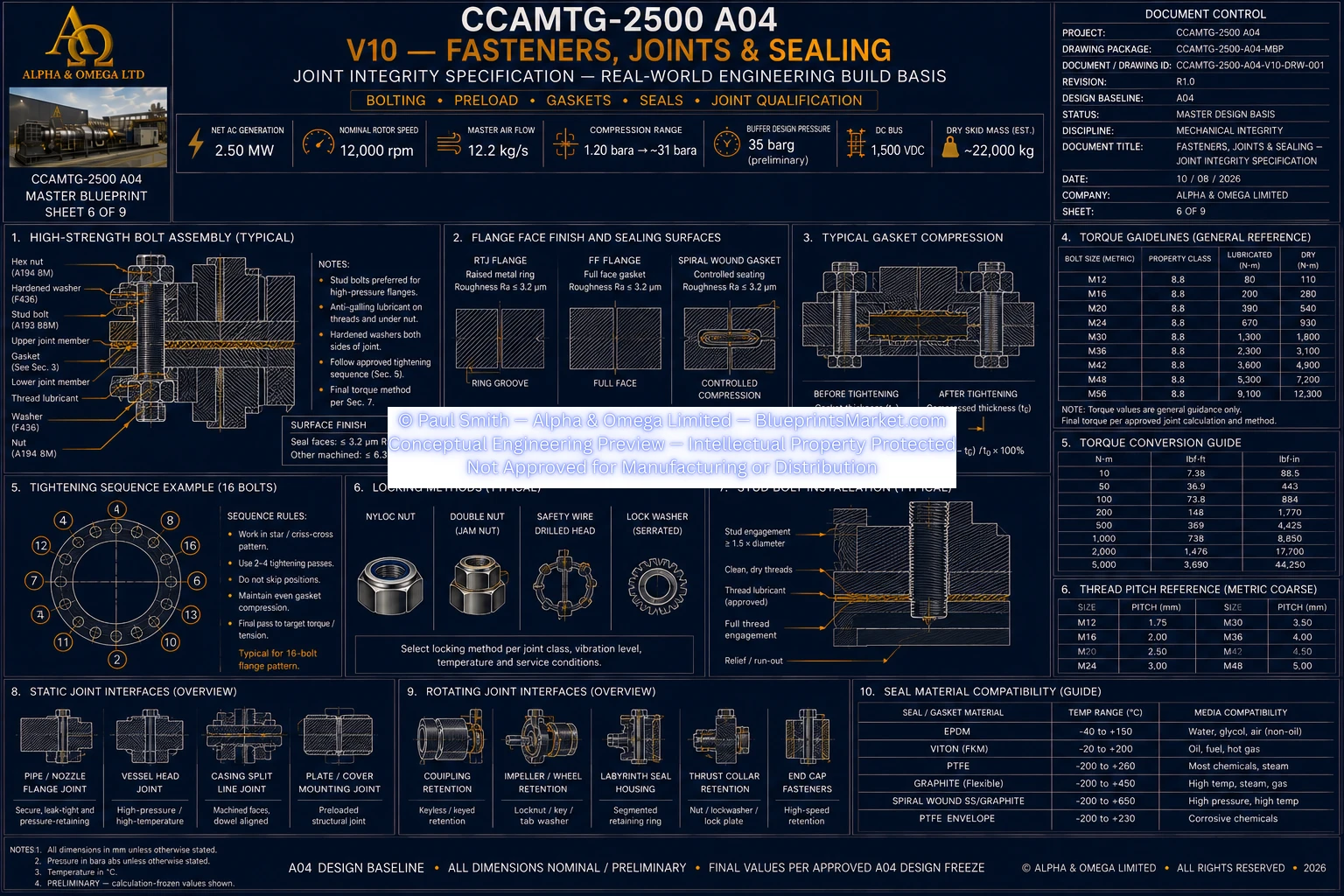
Controlled Tightening & Tensioning
- Calibrated torque procedures
- Torque-angle tightening
- Hydraulic tensioning
- Ultrasonic elongation measurement
- Direct bolt-elongation control
- Approved structural fastening methods
- Controlled multi-pass tightening sequences
- Installation verification and recording
Lubrication, Coatings & Galling Control
- Controlled fastener lubrication conditions
- Fastener coating compatibility
- Stainless-steel anti-galling strategies
- Thread-condition control
- High-strength fastener coating assessment
- Pressure-service lubricant compatibility
- Thread-fit protection following coating
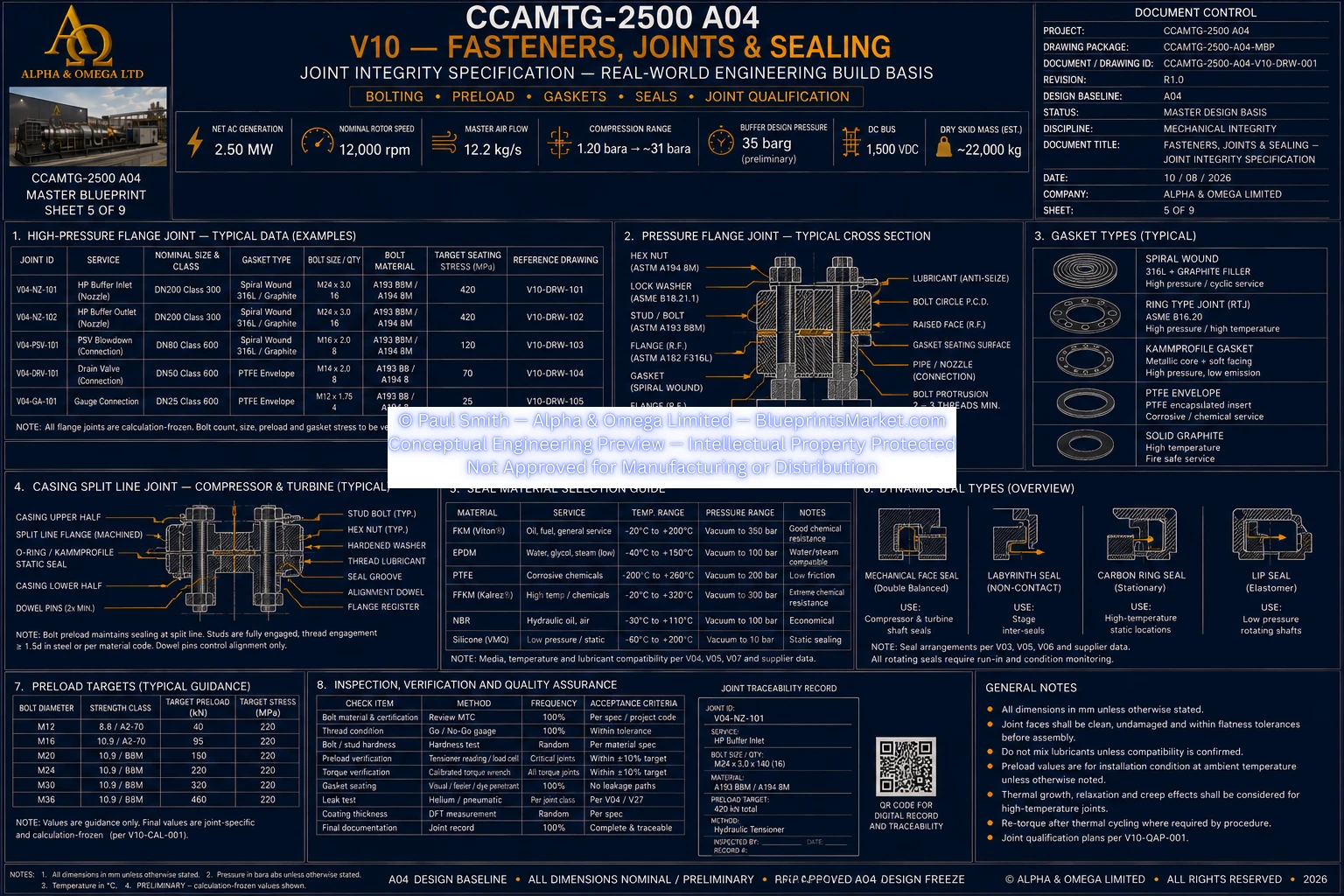
Pressure Flange Joint System
- High-pressure buffer vessel connections
- Pressure-relief and blowdown interfaces
- Compressor discharge connections
- Turbine inlet connections
- Reheat-system joints
- Cooling and thermal-energy-system connections
- Pressure-boundary gasket integration
- Controlled flange assembly and qualification
Gasket Systems
- Metallic and semi-metallic gasket systems
- Spiral-wound gasket applications
- Kammprofile sealing systems
- Graphite-based static sealing
- Engineered polymer sealing applications
- Elastomer O-ring systems
- Special high-integrity metallic seals
- Controlled gasket installation and replacement
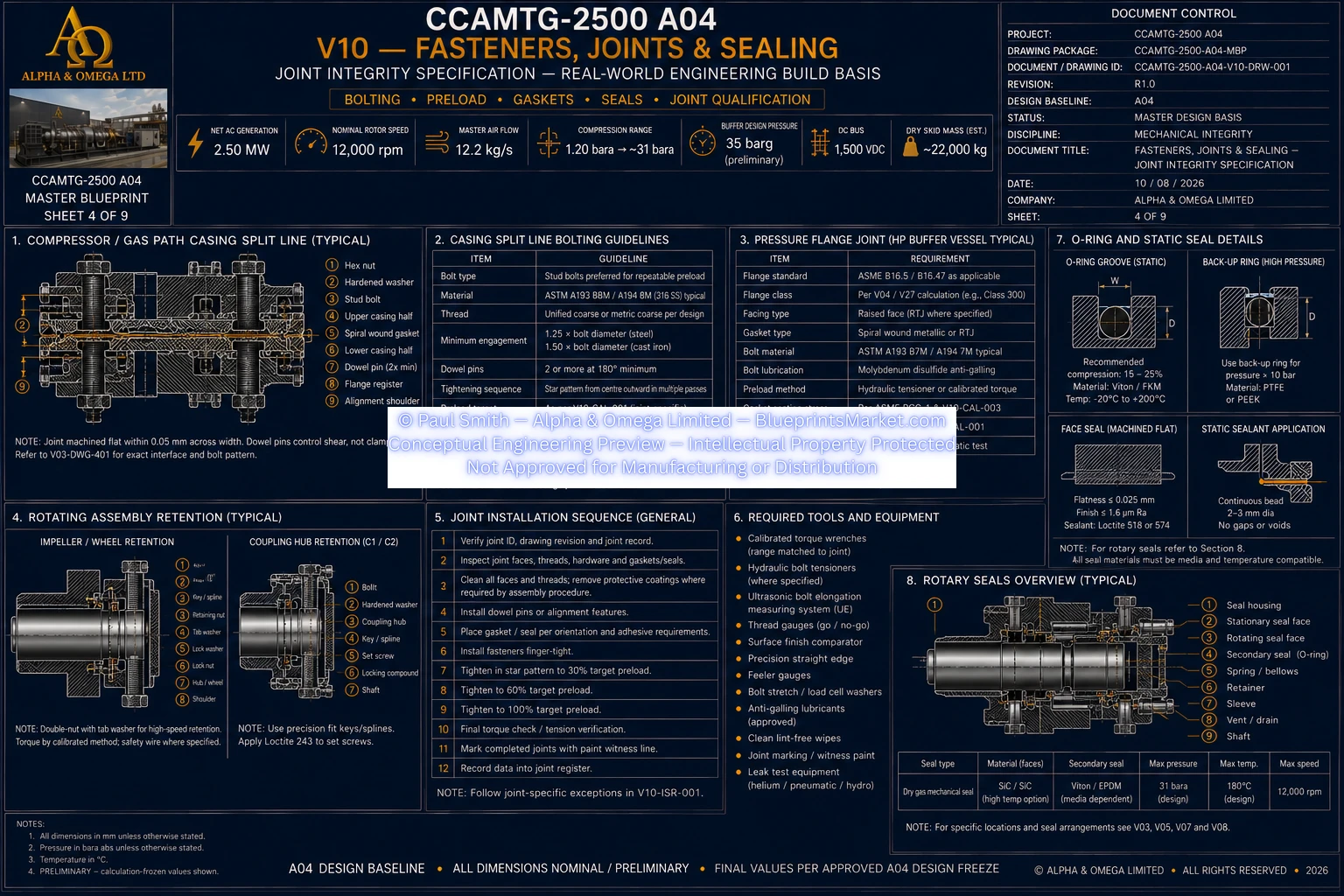
Compressor & Turbine Casing Joints
- Precision split-line joint engineering
- Controlled casing fastener preload
- Machined mating-surface control
- Distortion-controlled tightening sequences
- Casing alignment verification
- Rotor-clearance protection
- Qualified casing sealing methods
Rotating Fastener & Retention Systems
- Impeller and turbine-wheel retention
- High-speed coupling fastener systems
- Positive mechanical locking
- Centrifugal-load verification
- Torsional and fatigue assessment
- Rotating-mass balance control
- Critical fastener traceability
- Retention-system inspection
Magnetic Bearing & Touchdown Bearing Joints
- Active magnetic bearing housing joints
- Touchdown-bearing mounting interfaces
- Alignment-critical fastening systems
- Electromagnetic-load resistance
- Sensor bracket retention
- Anti-loosening strategies
- Magnetic-circuit hardware compatibility
Motor-Generator Joint Integrity
- Motor-generator stator and frame joints
- Electromagnetic torque-reaction control
- Thermal-cycle resistance
- Vibration-resistant fastening
- Rotor-retention interfaces
- Electrical bonding fastener coordination
Skid & Foundation Joint Interfaces
- Machine-foot and soleplate joints
- Soleplate-to-skid interfaces
- Structural skid connections
- Foundation anchoring interfaces
- Alignment-sensitive mounting joints
- Serviceable guard and panel fastening
Static & Dynamic Sealing Systems
- Compressor and turbine labyrinth sealing
- Static O-ring sealing
- Auxiliary shaft sealing
- Mechanical seals for auxiliary equipment
- Instrumentation thread sealing
- Gasketed access and casing covers
- Fluid, pressure and temperature compatibility control
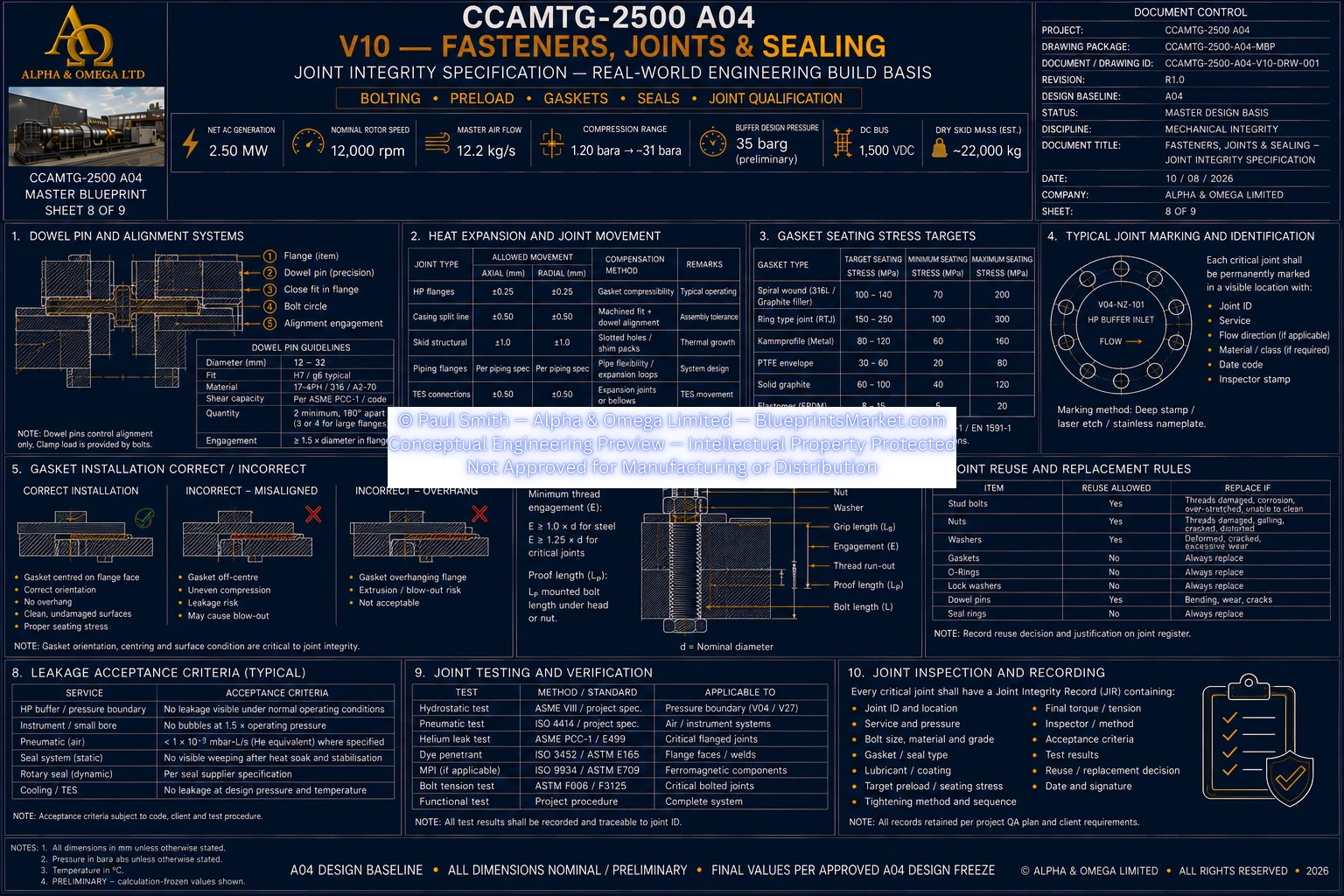
Critical Joint Control
- Unique critical-joint identification
- Parent assembly and drawing traceability
- Joint criticality classification
- Service and operating-condition definition
- Fastener and hardware specification control
- Surface-condition and lubrication control
- Preload and installation-method control
- Tightening-sequence documentation
- Inspection and acceptance records
- Controlled reuse requirements
Machine Joint Families
- Compressor casing joints
- Compressor discharge joints
- HP buffer vessel connections
- Pressure-relief and instrumentation connections
- Turbine casing joints
- Turbine inlet and reheat connections
- High-speed coupling joints
- Magnetic bearing housings
- Touchdown-bearing housings
- Motor-generator frame joints
- Skid equipment mounts
- Foundation interfaces
- Instrumentation fittings
Critical Joint Assembly Control
- Released drawing and joint-identification verification
- Fastener material and traceability verification
- Thread and mating-surface inspection
- Joint cleaning and preparation
- Gasket and seal verification
- Controlled lubricant application
- Multi-pass joint tightening
- Fastener-load verification where required
- Positive locking installation
- Controlled completion marking
- Installation record generation
- Post-assembly functional verification
Inspection, QA & Acceptance
- Fastener material and grade verification
- Thread and seating-surface inspection
- Calibrated installation-tool control
- Critical preload records
- Locking-system verification
- Pressure and leak testing where applicable
- Engineering-defined NDE requirements
- Critical component traceability
- Lifecycle acceptance records
Maintenance & Reuse Control
- Pressure-boundary gasket replacement controls
- Rotating-critical fastener replacement rules
- Single-use fastener identification
- Fastener condition inspection
- Critical thread inspection
- Controlled repair disposition
- Current joint-register verification before maintenance
Joint Failure Prevention
- Loss-of-preload prevention
- Fastener fatigue mitigation
- Self-loosening prevention
- Gasket leak and blowout prevention
- Galling and seizure control
- Material and coating compatibility
- Galvanic-corrosion mitigation
- Thread-stripping prevention
- Flange and casing distortion control
- Rotating-retention integrity
Engineering Standards Framework
- Bolted flange assembly standards
- Pressure-vessel and pressure-boundary requirements
- Pressure bolting material standards
- Metric machinery fastener standards
- Thread geometry and gauging standards
- Structural bolting requirements
- Flange calculation methodology
- Rotor-balance interface requirements
- Quality-management and traceability controls
Volume 10 Engineering Package
- Joint Integrity Specification
- Critical Bolted Joint Register
- Gasket & Seal Register
- Pressure Flange Joint Standards
- Casing Split-Line Joint Details
- Rotating Fastener Locking Details
- Critical Bolt Preload Calculations
- Gasket Seating & Flange Load Calculations
System Integration
- Compressor subsystem interfaces
- HP buffer vessel interfaces
- Three-stage turbine interfaces
- Magnetic and touchdown bearing interfaces
- Thermal and cooling-system interfaces
- Structural skid and foundation interfaces
- Electrical-system interfaces
- Instrumentation and control interfaces
Design & Release Philosophy
- Every critical joint is individually engineered and controlled
- Critical preload is determined from the governing joint calculation
- Fastener, nut, washer, coating and lubricant combinations are controlled
- Pressure-boundary joints require verified sealing and pressure integrity
- Rotating-critical fasteners require retention and fatigue verification
- Installation methods account for controlled preload accuracy
- Critical joints remain traceable through calculation, assembly and inspection records
- Final analysis-dependent engineering values are released only after the governing design and qualification processes are complete