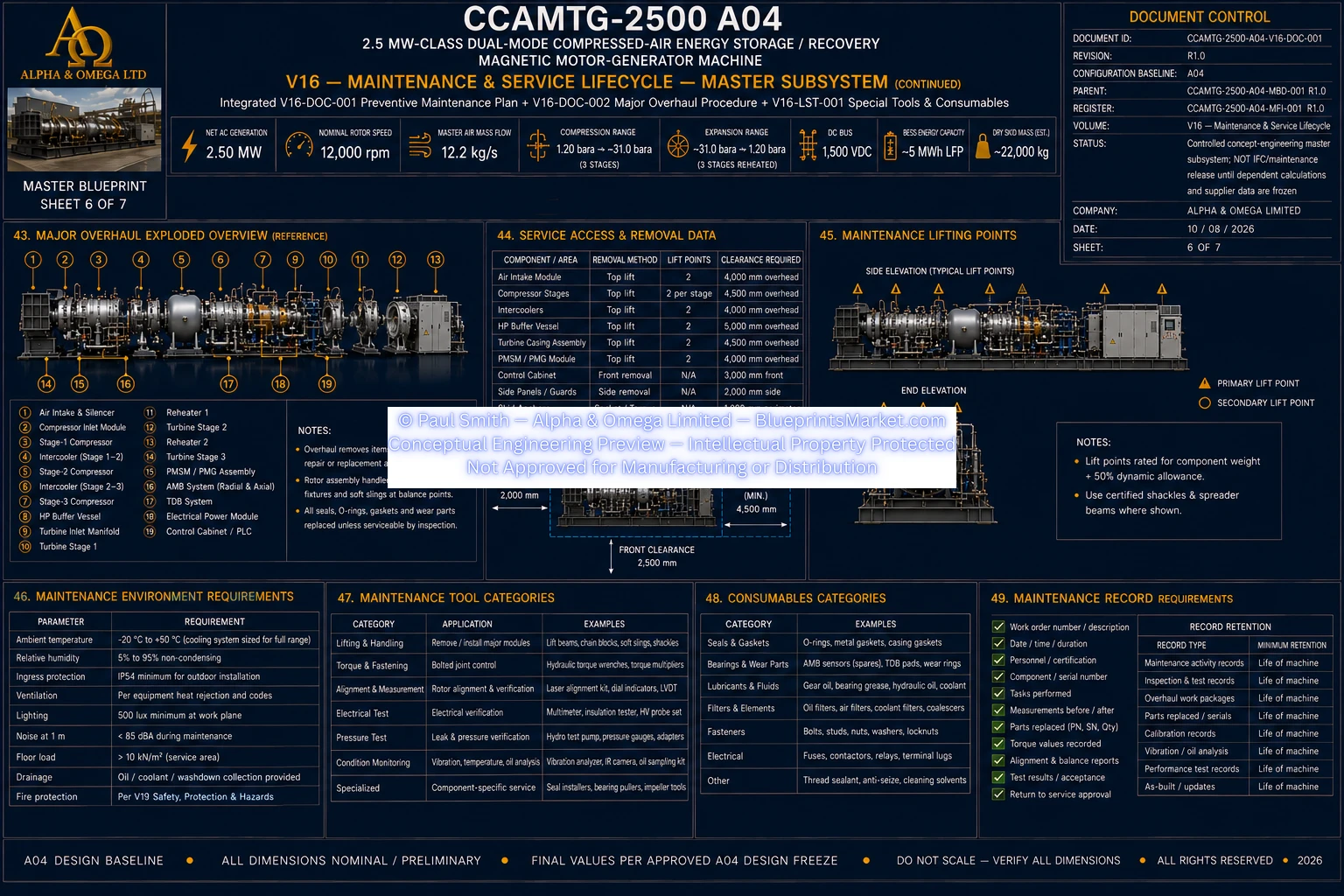
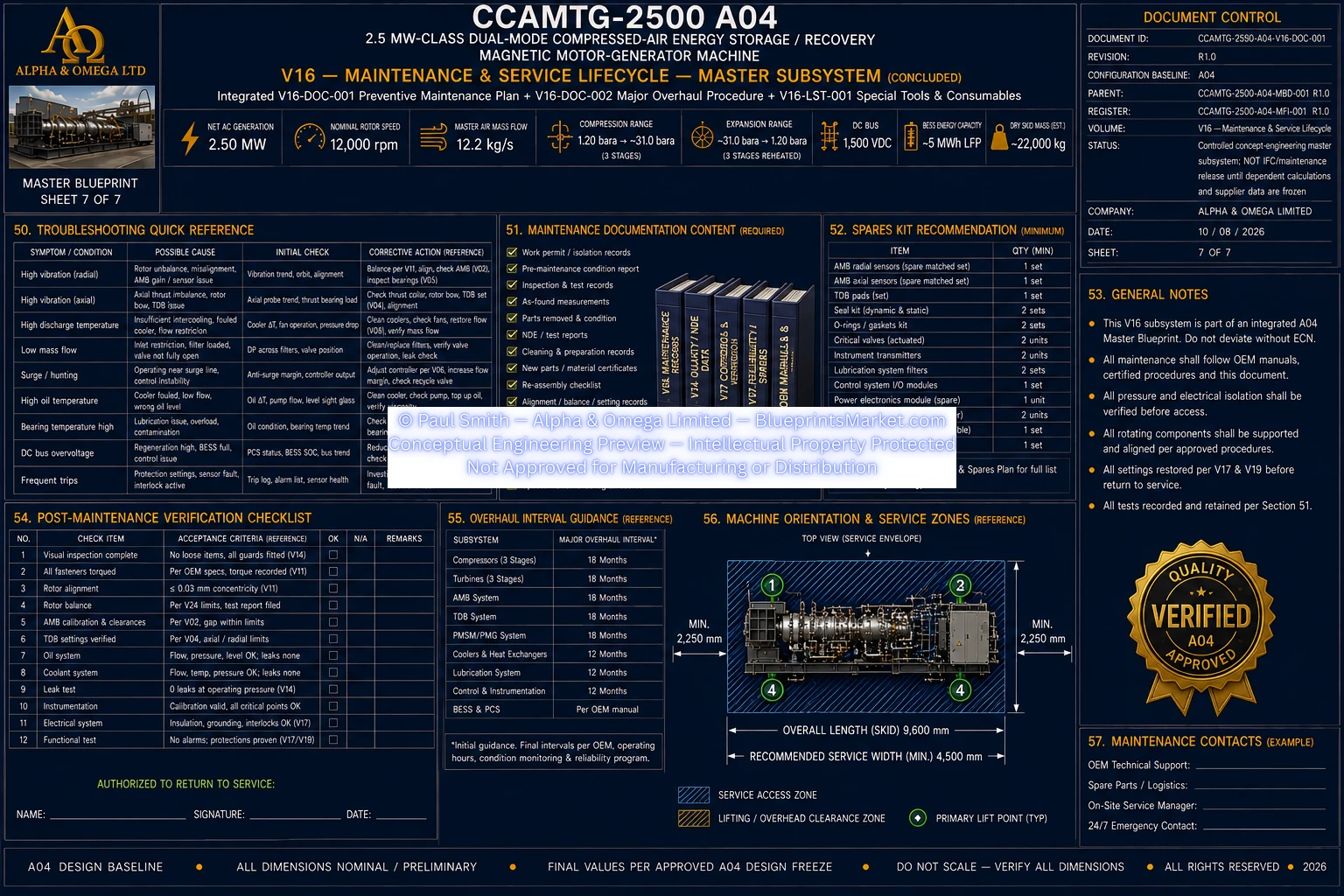
CCAMTG-2500 A04 — Maintenance, Service & Lifecycle
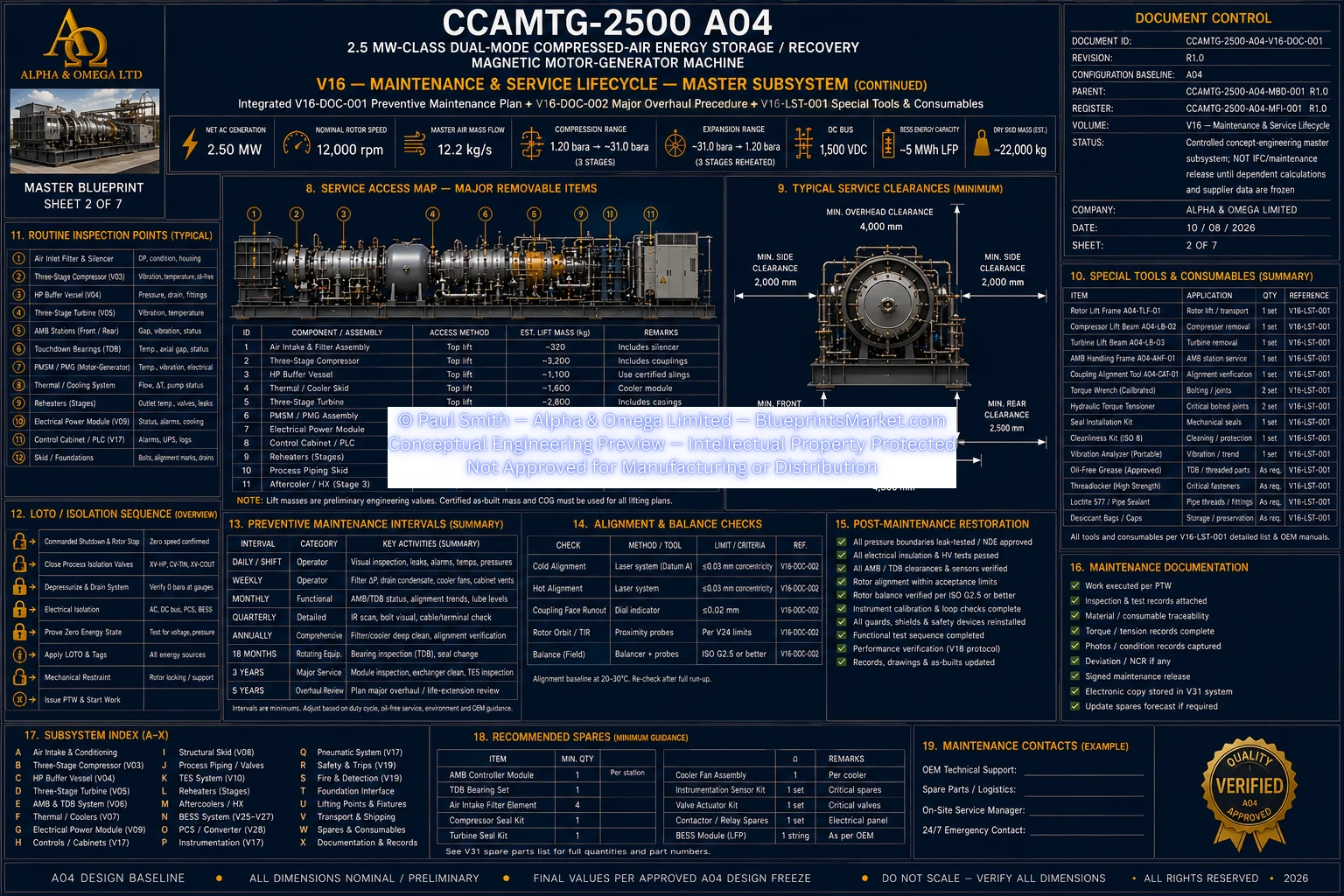
Volume 16 defines the complete maintenance, service and lifecycle architecture for the CCAMTG-2500 A04,
covering preventive maintenance, condition monitoring, inspection, major overhaul, special tools,
consumables, pressure and electrical isolation, rotor restoration, magnetic-bearing service,
post-maintenance testing, return-to-service controls and permanent lifecycle records.
Main Public Maintenance Baseline
- Machine Class: 2.5 MW-Class Dual-Mode Compressed-Air Energy Storage / Recovery Magnetic Motor-Generator Machine
- Net AC Generation: 2.50 MW
- Nominal Rotor Speed: 12,000 rpm
- Master Air Mass Flow: 12.2 kg/s
- Compression Range: 1.20 bara → ~31 bara
- Expansion Range: ~31 bara → 1.20 bara
- DC Bus: 1,500 VDC
- BESS Energy Capacity: ~5 MWh LFP
- Dry Skid Mass (Estimated): ~22,000 kg
A04 Lifecycle Status:
Public baseline values identify the current machine configuration. Final service intervals, wear limits,
replacement criteria, clearances, proof-test intervals and supplier-controlled lifecycle limits remain
governed by approved engineering analyses, codes, reliability studies and OEM data.
Maintenance & Lifecycle Overview
- Preventive maintenance
- Condition-based maintenance
- Post-trip inspection
- Planned minor service
- Planned major inspection
- Major machine overhaul
- Preservation and storage maintenance
- Post-maintenance restoration testing
- Return-to-service control
- Lifecycle traceability and records
Maintenance Safety State
- Command controlled machine shutdown
- Verify zero shaft torque and zero rotor speed
- Isolate high-pressure compressed-air sources
- Depressurize blocked-in pressure volumes
- Verify safe pressure before opening any pressure boundary
- Isolate AC, DC, PCS, converter and BESS electrical sources
- Prove stored electrical energy discharged
- Apply approved lockout and tagout controls
- Disable automatic start and remote commands
- Establish safe rotor support before intrusive rotor work
Pressure & Electrical Isolation
- Fail-safe pressure isolation established before service access
- Controlled blowdown and drain paths used for depressurization
- Independent overpressure protection remains available until pressure is proven safe
- Electrical power paths isolated before maintenance
- DC bus verified discharged with approved rated test equipment
- Grounding and earthing applied where required
- Stored pneumatic, thermal and electrical energy controlled before access
Maintenance Interval Strategy
- Continuous operating condition monitoring
- Pre-start and each-start inspection
- Post-trip and abnormal-event inspection
- Planned minor service
- Planned major inspection
- Major overhaul based on reliability, condition and supplier criteria
- Preservation and storage maintenance during extended outages
- Numeric service intervals remain controlled by reliability and OEM data
Continuous Condition Monitoring
- Rotor speed trends
- Rotor position and vibration trends
- Pressure trends
- Temperature trends
- Airflow trends
- Cooling-system condition
- Electrical insulation and fault status
- Alarm and trip history
- BESS operating and safety status
Pre-Start Maintenance Checks
- General machine walkdown
- Leak inspection
- Guard and access verification
- Drain and condensate condition
- Cooling-system availability
- AMB and touchdown-bearing health
- Electrical precharge readiness
- Valve-state verification
- Active protection-trip review
Post-Trip & Abnormal Event Inspection
- Review machine event and trip history
- Inspect systems affected by the initiating fault
- Inspect for consequential damage
- Perform required NDE where indicated
- Verify protection systems before restart
- No restart until the initiating cause has been dispositioned
Compressor Maintenance
- Inspect compressor inlet and flow path
- Inspect impellers and diffusers for fouling, erosion and foreign-object damage
- Inspect compressor casing and labyrinth seals
- Verify inlet guide vane motion and feedback
- Inspect anti-surge system interfaces
- Review pressure, temperature and airflow trends
- Rotor disturbance triggers balance and alignment review
Turbine Maintenance
- Inspect turbine nozzle guide vanes
- Inspect turbine wheels and aerodynamic surfaces
- Inspect labyrinth sealing systems
- Inspect casing and exhaust interfaces
- Check for erosion, deposits, rubs, cracks and thermal damage
- Critical indications require engineering and NDE disposition
- Restore rotor balance and alignment after intrusive service
PMSM/PMG Maintenance
- Inspect motor-generator cooling systems
- Review winding and insulation condition
- Inspect electrical terminals and connections
- Review rotor-retention condition and service evidence
- Review electrical operating trends
- Supplier procedures govern permanent-magnet rotor service
Active Magnetic Bearing Maintenance
- Trend radial and axial rotor position
- Trend vibration and magnetic-bearing demand
- Monitor coil current and temperature
- Inspect position sensors and cabling
- Inspect rotor target sleeves
- Inspect magnetic laminations and wiring
- Verify sensor zero and setup after relevant service
- Supplier and electromagnetic design limits govern final acceptance
Touchdown Bearing Maintenance
- Inspect after any touchdown or levitation-loss event
- Inspect bearing surfaces and associated rotor interfaces
- Record event history
- Replace only according to approved supplier damage and life criteria
- Verify monitoring before return to service
High-Speed Coupling Maintenance
- Inspect diaphragm packs
- Inspect coupling pilots and mating interfaces
- Inspect critical fasteners
- Check for fretting and crack-like indications
- Verify coupling runout after disturbance
- Restore rotor alignment before high-speed operation
Heat Exchanger & Thermal Maintenance
- Inspect compressor intercoolers
- Inspect aftercooler and heat-recovery equipment
- Inspect turbine preheater
- Inspect interstage reheaters
- Check for leaks, fouling and abnormal pressure drop
- Verify thermal performance
- Inspect drains, supports and insulation
- Maintain pressure integrity according to the approved design basis
HP Buffer Vessel Maintenance
- External vessel inspection
- Internal inspection where required by the approved code plan
- Corrosion and erosion assessment
- Weld and NDE inspection
- Pressure-relief device verification
- Drain inspection
- Pressure and temperature instrumentation checks
- Final inspection intervals controlled by the governing pressure code and design package
Valve & Pressure Protection Maintenance
- Verify control-valve stroke
- Verify fail-safe valve action
- Verify actuator and position feedback
- Check seat leakage where required
- Inspect anti-surge recycle operation
- Verify relief-device certification
- Inspect blowdown and non-return paths
- Pressure-class service intervals remain code and supplier controlled
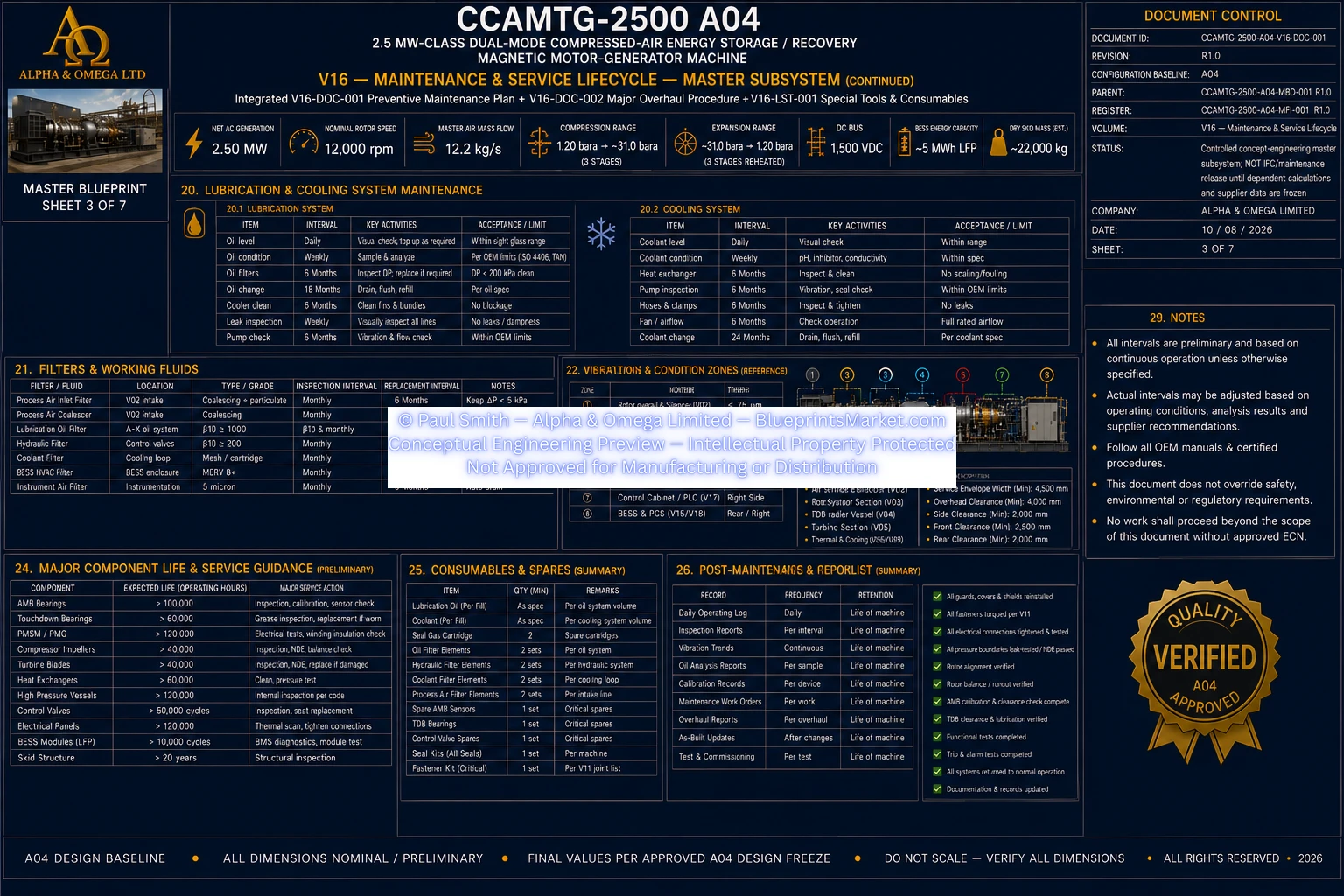
Cooling Package Maintenance
- Alternate duty and standby pumps
- Inspect pump seals and bearings
- Clean cooling filters
- Inspect heat exchanger and dry cooler cleanliness
- Monitor coolant chemistry
- Inspect expansion system condition
- Verify cooling flow, temperature, pressure and differential-pressure instrumentation
Electrical Power System Maintenance
- Inspect power terminals and busbars
- Inspect contactors and switching devices
- Inspect DC precharge system
- Verify earthing and bonding
- Perform approved insulation testing
- Inspect converter cooling systems
- Review capacitor, semiconductor and protection condition where applicable
- Firmware and protection maintenance remains controlled by OEM and electrical engineering
BESS Maintenance
- Review BMS operating logs
- Review cell and module condition trends
- Inspect HVAC or liquid-cooling systems
- Inspect contactors and electrical isolation
- Verify fire and gas detection systems
- Verify thermal-management status
- Battery service remains controlled by OEM and BMS requirements
- No generic battery-cell replacement interval is assumed
Controls, PLC, SIS & HMI Maintenance
- Maintain controlled backups
- Verify configuration management
- Perform I/O proof testing
- Verify alarm and trip chains
- Review network health and time synchronization
- Verify SIS functions according to approved proof-test requirements
- Unauthorized control-logic changes are prohibited
Instrumentation Maintenance
- Calibrate pressure instrumentation
- Calibrate temperature instrumentation
- Calibrate flow instrumentation
- Verify rotor-speed channels
- Verify vibration and rotor-position channels
- Compare redundant sensor channels
- Replace damaged probes and impulse lines where required
- Maintain complete calibration records
Structural Skid & Foundation Maintenance
- Inspect structural welds
- Inspect corrosion protection
- Inspect structural bolts and guards
- Inspect grout and machinery chocks
- Monitor settlement indicators
- Review machine-alignment indicators
- Perform alignment survey following structural movement
- Foundation and anchor requirements remain site-engineer controlled
External CAES Interface Maintenance
- Verify external storage interface condition
- Inspect machine-side isolation systems
- Inspect check-valve and protection interfaces
- Coordinate storage inspection with the certified site system
- Machine maintenance scope verifies the interface rather than replacing the site storage inspection program
TES Interface Maintenance
- Inspect thermal-storage interface equipment
- Inspect pumps and valves where applicable
- Check heat-transfer medium condition
- Inspect containment and leakage condition
- Verify heat-delivery capability to turbine preheat and reheat systems
Preventive Maintenance Task Families
- Machine walkdown
- Operating trend review
- Inlet, filter and IGV service
- Compressor flow-path inspection
- Turbine flow-path inspection
- AMB system inspection
- Touchdown-bearing inspection
- Coupling and alignment verification
- Cooling-system service
- Heat-exchanger and TES inspection
- HP vessel inspection
- Valve functional testing
- Electrical-system inspection
- BESS maintenance
- Controls and SIS proof testing
- Skid and foundation inspection
- Instrumentation calibration
- Preservation maintenance
No-Restart Conditions
- Unexplained increase in AMB demand or rotor vibration
- Evidence of rotor rub
- Any touchdown event before required inspection
- Unresolved overspeed or high-vibration event
- Unresolved AMB instability
- Pressure-boundary leakage or failed overpressure protection
- Failed fail-safe valve operation
- Electrical insulation or earthing defects
- DC bus discharge failure
- BESS safety alarm or protection defeat
- Machine alignment outside approved limits
- Crack-like indications in critical rotating or pressure components
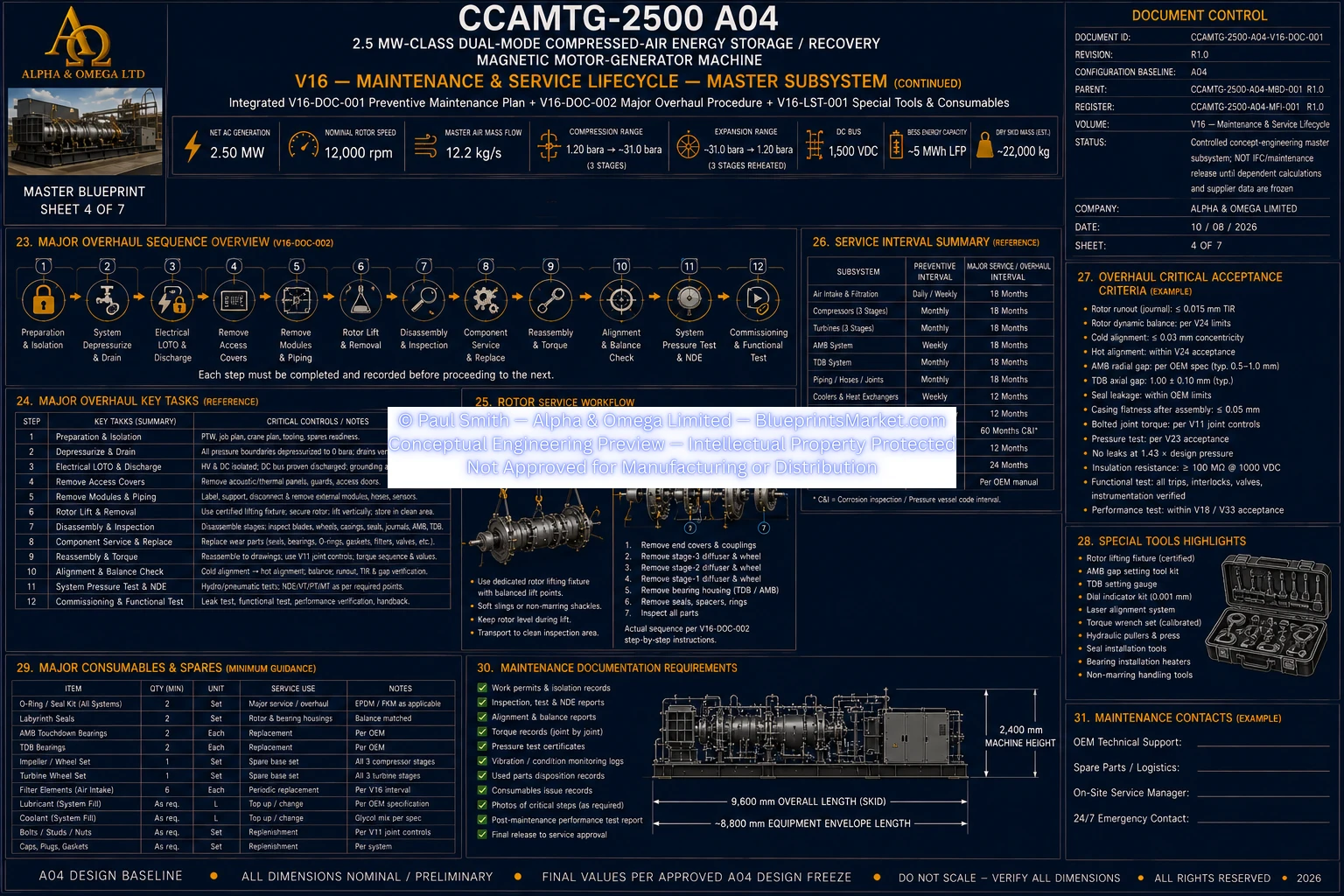
Major Overhaul Engineering
- Define overhaul scope from operating history, condition and reliability data
- Freeze applicable drawings, parts, tolerances and inspection requirements
- Establish verified shutdown and isolation
- Record complete as-found baseline condition
- Remove auxiliaries under controlled identification and FME
- Install approved rotor-support fixtures
- Separate high-speed couplings under controlled procedures
- Strip and inspect compressor assemblies
- Service the PMSM/PMG according to supplier procedures
- Strip and inspect turbine assemblies
- Inspect AMB and touchdown-bearing systems
- Perform required dimensional and NDE acceptance
- Restore rotor balance
- Reassemble using controlled parts and joint procedures
- Restore cold alignment
- Restore pressure, electrical and control systems
Post-Overhaul Functional Testing
- Cooling-system circulation test
- Valve stroke and fail-state verification
- AMB levitation verification
- Touchdown-bearing monitoring verification
- Electrical precharge verification
- Interlock testing
- Emergency-stop testing
- Protection-chain verification
- Controlled rotor run-up
- Vibration and rotor-position monitoring
- Thermal stabilization checks
- Performance acceptance under approved test conditions
Rotor & Alignment Restoration
- Restore the common rotor datum
- Measure rotor condition before and after overhaul
- Verify coupling interfaces
- Restore module concentricity
- Restore approved cold alignment
- Verify magnetic-bearing geometry
- Restore balance according to the approved rotordynamic and balance criteria
- Final hot and dynamic acceptance occurs during controlled recommissioning
Pressure, Thermal & Fluid Service
- Pressure-boundary service follows approved pressure-code requirements
- Heat-exchanger service follows the approved thermal design
- Process seals are replaced according to the controlled seal register
- Cooling-system flow remains based on actual machine heat losses
- Unapproved legacy cooling assumptions are not reinstated during service
- Pressure-test values are never inferred from generic maintenance procedures
Special Service Tools
- Certified lifting beams, slings and shackles
- Rotor handling cradles and support stands
- Laser or optical alignment systems
- Precision runout instrumentation
- Calibrated torque and tension tooling
- Industrial borescope equipment
- NDE equipment
- Electrical isolation and test equipment
- Pressure isolation and blinding equipment
- Traceable instrumentation calibration equipment
- Foreign-material-exclusion service tooling
- AMB sensor setup fixtures
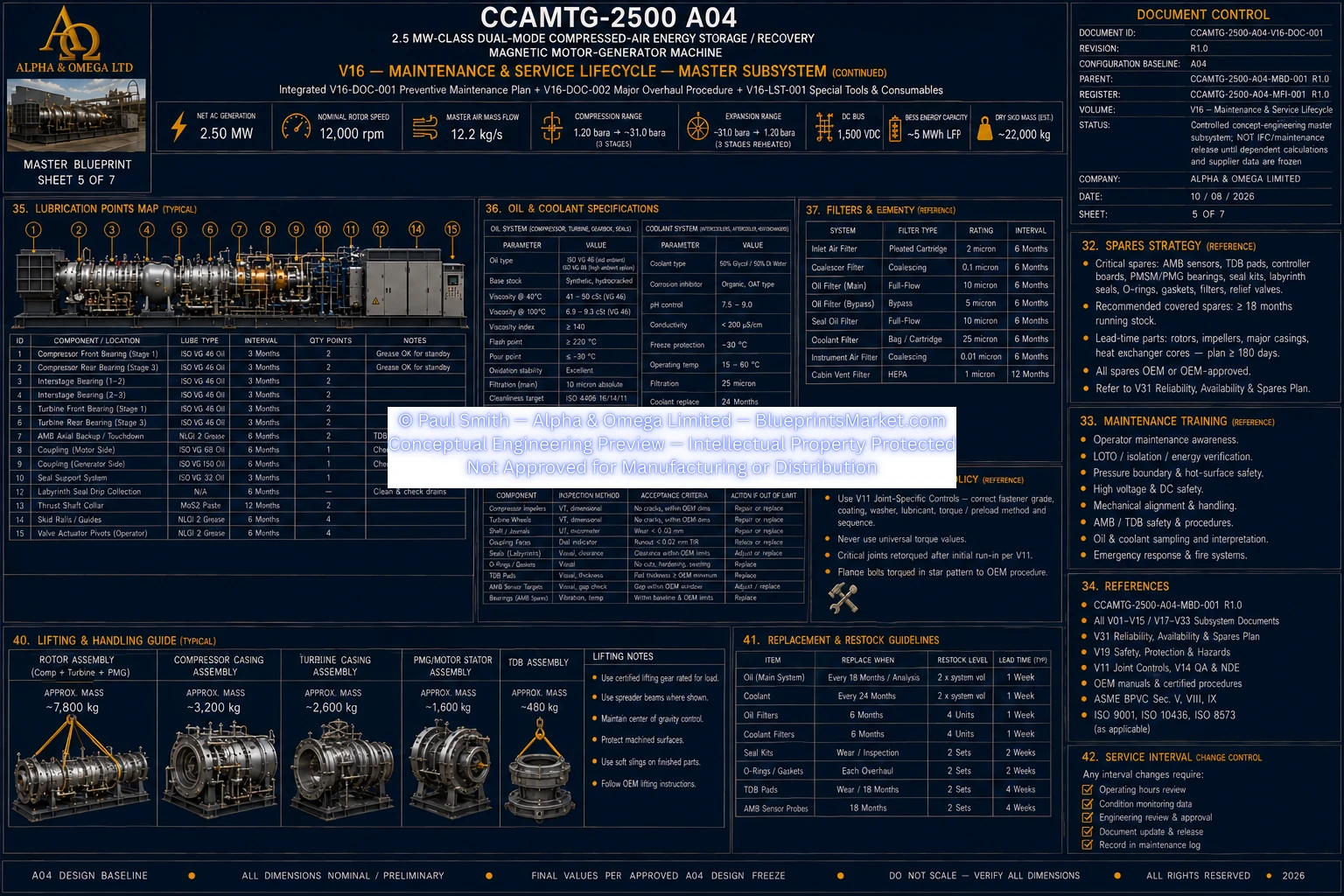
Maintenance Consumables
- Approved cooling fluids and treatment chemicals
- Approved filter elements
- Controlled gaskets and O-rings
- Controlled process seals
- Approved replacement fasteners and locking devices
- Material-compatible cleaning products
- Corrosion inhibitors and preservation materials
- OEM-approved electrical consumables
- OEM-approved thermal interface materials
Replacement Part Control
- Replacement materials preserve the approved design basis
- Pressure components retain required material and traceability controls
- Compressor and turbine rotating components use approved alloy and heat-treatment specifications
- Main shaft replacements follow approved fatigue and rotordynamic engineering
- AMB components remain supplier and electromagnetic-design controlled
- PMSM/PMG electrical and magnetic components remain supplier controlled
- Process-seal replacements follow the approved compatibility register
- No uncontrolled material substitution is permitted
Fastener & Joint Service Rules
- No universal torque value is used for critical joints
- Critical joints follow their controlled preload calculation
- Rotating fasteners require verified retention and fatigue integrity
- Pressure-boundary fasteners retain gasket seating and pressure-load requirements
- Casing, flange, bearing, motor-generator and skid hardware is not substituted without approved engineering change
Return-to-Service Gates
- Work-pack closeout complete
- Mechanical integrity restored
- Pressure integrity restored
- Cooling and thermal systems healthy
- AMB and touchdown-bearing systems healthy
- Electrical system healthy
- Controls, SIS and emergency-stop functions verified
- Controlled low-speed and run-up testing completed
- Relevant machine performance revalidated
- Lifecycle records updated before final release
Maintenance Records & Traceability
- Unique asset and work-order identification
- Operating hours and cycle history
- Trip and abnormal-event history
- As-found and as-left measurements
- Instrument calibration records
- Rotor position, vibration, alignment, runout and balance records
- Replacement part and material traceability
- Fastener and joint records
- Seal and gasket batch records
- NDE records
- Software and firmware configuration records
- Pressure, electrical and relief-certification records
- Engineering change and nonconformance records
V16 Maintenance Package
- Preventive Maintenance Plan
- Major Overhaul Procedure
- Special Tools & Consumables List
- Condition-monitoring and escalation framework
- Return-to-service gate architecture
- Replacement material and part-control rules
- Maintenance traceability and lifecycle records
Lifecycle Release Philosophy
- Maintenance does not override governing safety, quality, joint or analysis controls
- All stored pressure and electrical energy is verified isolated before intrusive work
- Rotor disturbance requires restoration of alignment, balance and AMB acceptance
- Supplier-controlled components remain governed by approved supplier limits
- Pressure equipment remains governed by the approved pressure-code design
- Reliability data governs final numeric preventive-maintenance intervals
- Post-maintenance operation requires controlled recommissioning and acceptance
- Every significant maintenance intervention becomes part of the permanent machine lifecycle record